How to Design a Wine End Cap Display That Sells
Learn the strategic principles behind wine end cap display design that drives conversion, from visual hierarchy to price architecture.
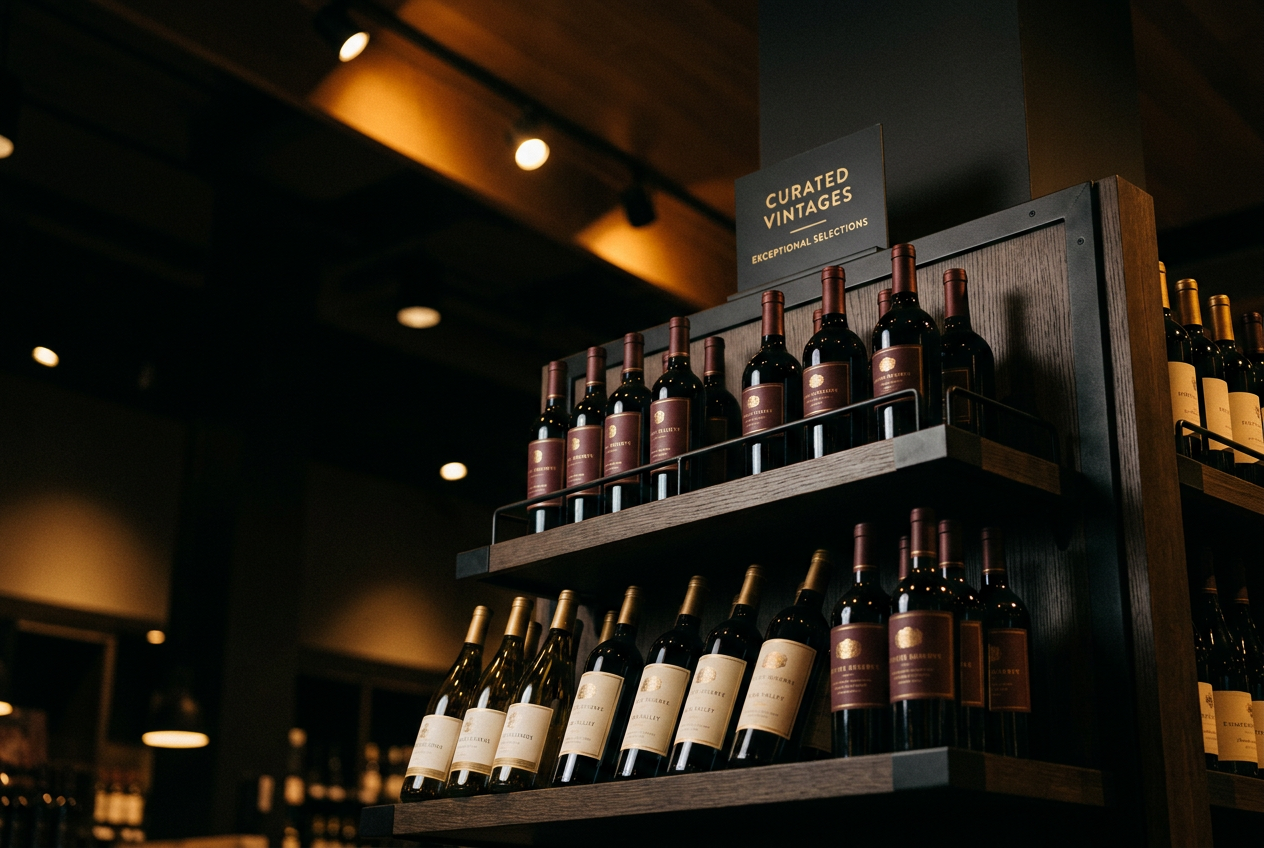
The end cap is the most contested real estate in beverage retail. You’ve negotiated the placement, paid the slotting fee, and secured four glorious weeks of prime visibility. Then you fill it with a generic shipper featuring your standard bottle shot, a small logo, and “Award-Winning Wines” in script font. Six weeks later, your depletion report shows a modest 12% lift—barely enough to justify the investment. The display wasn’t bad. It just wasn’t designed to sell.
Start With the Three-Second Test
Shoppers moving through a Total Wine or major grocery chain are covering ground. They’re not browsing your end cap—they’re passing it at roughly three feet per second while mentally running through their shopping list. Your display has a vanishingly small window to accomplish three things: stop forward motion, communicate a clear value proposition, and provide a reason to act now.
This means your visual hierarchy needs to be ruthless. The single most important element—usually your price point or promotional offer—should be readable from fifteen feet away. Not your logo. Not your vineyard photography. The thing that makes someone think “wait, that’s interesting” before they’ve consciously processed what they’re looking at. One Napa Valley producer we worked with increased their end cap conversion by 34% simply by making their limited-time price the dominant visual element, moving their brand lockup to secondary position. The brand equity was already there; what was missing was the trigger.
Design for the Retail Environment, Not the Boardroom
There’s a recurring pattern in display design: creative gets developed in a well-lit conference room, approved by stakeholders viewing it on a backlit monitor, and then installed in a fluorescent-lit retail environment where it sits next to a competitor’s display that’s three inches taller and significantly more colorful. Context collapse is one of the most common reasons end cap programs underperform.
Effective wine end cap display design requires thinking in terms of the actual sightlines, lighting conditions, and competitive set your display will live within. Dark, moody photography that looks stunning on screen often disappears on the retail floor. Elegant minimalist design gets overwhelmed by the visual chaos of a busy wine section. This isn’t an argument for loud, garish creative—it’s an argument for designing with the real environment in mind from the start.
The most successful displays we’ve developed share a common trait: they create a “visual break” from their surroundings. Sometimes this means going brighter when competitors go dark. Sometimes it means using a distinctive structural element that casts shadows differently. For a rosé program launching into Costco, we used a structural approach with angled shelving that caught overhead light differently than standard wire racks—a subtle differentiation that made the display feel more premium without requiring complex graphics.
Build Price Architecture Into the Display Structure
Here’s where many brands leave money on the table: they treat an end cap as a single-SKU opportunity when the physical space actually supports a more sophisticated selling strategy. A well-designed end cap display can drive both volume on your core offering and trade-up to higher-margin SKUs.
Consider structuring your end cap with a clear “anchor” price point—the offer that stops traffic and provides the value signal—while using vertical positioning and visual hierarchy to guide attention toward a premium option. The $14.99 bottle gets the dominant position and the promotional call-out. The $24.99 reserve sits at eye level with more refined presentation. Roughly 15-20% of shoppers will self-select into the higher tier if the architecture makes it easy.
This approach requires thinking about the display as a merchandising system rather than a billboard. Shelf talker placement, bottle orientation, and even the angle of the display header all influence which products get attention and in what sequence. One producer running a holiday program at a major regional chain tested this architecture against a single-SKU approach and saw average transaction value increase by $4.80 per purchase while maintaining unit volume.
The Details That Drive Depletion
Structural integrity matters more than most brand teams realize. A display that arrives damaged, takes forty-five minutes to assemble, or starts sagging after a week of bottle weight won’t deliver results regardless of how good the creative is. Material selection, assembly complexity, and pack-out efficiency all directly impact whether your display actually makes it to the floor and stays there looking sharp.
The best wine end cap display programs treat execution as a design constraint from the beginning—not something to figure out after creative approval. That means understanding your retail partner’s receiving process, their assembly capabilities, and their maintenance expectations before you finalize structural decisions.
Getting this right requires a blend of creative vision and operational pragmatism that’s difficult to develop in-house without significant trial and error. The cost of that learning curve often exceeds the cost of bringing in a team that’s already solved these problems across dozens of programs and retail environments.