Custom Wine Displays vs. Stock Fixtures: When to Go Custom
Knowing when a custom wine display justifies the investment separates strategic retail marketing from expensive experimentation.
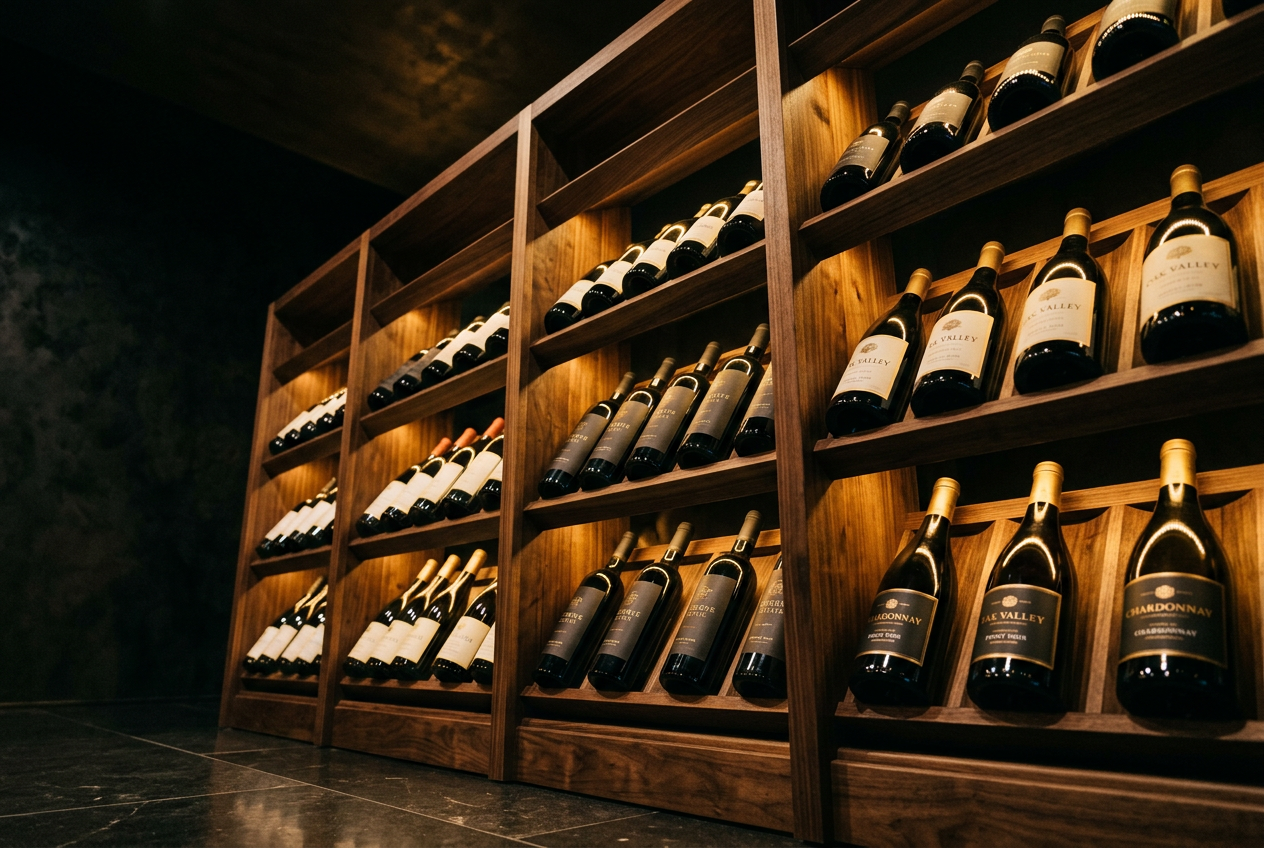
Every trade marketing budget includes a line item for retail displays, and every year the same question surfaces: should we invest in custom fixtures or stretch our dollars with stock solutions? The answer isn’t always “go custom” — despite what every fabrication shop will tell you. But it’s also not always “save the money” — despite what your CFO might prefer. The right call depends on placement context, volume commitments, and what you’re actually trying to achieve at shelf.
The Real Cost Equation Isn’t Just Unit Price
When brand managers compare a $45 stock wire rack to a $400 custom wood display, they’re often looking at the wrong math. The relevant calculation includes placement durability, sell-through lift, and reorder rates — not just unit cost.
Stock fixtures work fine for commodity positioning. If you’re running a straightforward deal stack at Total Wine with strong pricing and decent shelf tags, an off-the-shelf wire rack holds bottles perfectly well. The shopper is buying on price, and the display just needs to hold product and stay upright through the promotion window.
Custom wine displays earn their premium in a different scenario: when you’re asking the display itself to do persuasion work. A well-designed custom fixture communicates quality, origin story, and brand positioning before the shopper reads a single word of copy. This matters enormously for wines priced above $20, where purchase decisions involve more consideration and the display becomes part of the value proposition. A $35 Napa Cabernet sitting in a generic wire rack sends a confusing signal. The same bottle in a branded wood display with regional photography and tasting notes feels like it belongs at that price.
Placement Context Changes Everything
Where the display lives determines whether custom investment makes sense. High-traffic grocery end caps see hundreds of shoppers per hour, but dwell time is minimal — people are moving fast, grabbing items on autopilot. In these placements, stock fixtures with strong pricing and clear deal communication often outperform elaborate custom builds. The display doesn’t need to tell a story; it needs to shout a deal.
Independent wine shops and fine wine departments present the opposite dynamic. Shoppers browse, compare, read back labels. They’re open to discovery and willing to engage with a brand narrative. Here, a custom wine display functions as a silent salesperson, providing the education and credibility cues that move consideration to purchase. The ROI on custom fabrication at a high-performing independent retailer can dwarf the returns from stock fixtures scattered across twenty grocery stores.
The on-premise channel adds another dimension. A custom back-bar display at a respected restaurant or hotel bar delivers impressions to a captive audience in a premium context. These placements often justify significant per-unit investment because they shape brand perception among influential consumers and trade gatekeepers simultaneously.
Volume Commitments and Lifecycle Planning
Custom displays only make financial sense at certain volume thresholds. A single display for a flagship account might be worth any investment if that account moves serious volume and influences regional buying patterns. But spreading that same custom design across a hundred placements requires hard conversations about fabrication costs, shipping logistics, and realistic placement timelines.
Smart trade marketing teams think in tiers. Flagship custom fixtures for the top accounts that genuinely move needles — the independent fine wine shops with strong followings, the premium grocery chains with destination wine departments, the influential on-premise accounts. Then purpose-built but simplified displays for the next tier — still branded, still quality construction, but designed for faster production at lower unit costs. Stock fixtures for the long tail of placements where you need presence but the display isn’t doing persuasion work.
This tiered approach also acknowledges lifecycle realities. Custom displays should be designed for specific promotional windows or seasonal programs, with a clear plan for removal, refurbishment, or replacement. The worst outcome is an expensive custom fixture sitting in a retailer’s back room because nobody planned for what happens after the initial placement.
Making the Call
The decision framework ultimately comes down to this: Is the display primarily holding product, or is it actively selling? If you’re asking a fixture to communicate quality, tell an origin story, or justify a premium price point, custom fabrication typically delivers returns that justify the investment. If you’re running price-driven promotions where the deal is the message, stock fixtures free up budget for deeper discounts or wider placement.
The brands that win at retail treat this as strategic portfolio management rather than a binary choice. They know exactly which placements demand custom investment and why, and they have the fabrication partnerships and planning discipline to execute that strategy without budget surprises.