How Brands Activate at State Fairs Without Losing Their Minds
State fair wine activations demand ruthless planning. Here's how smart brands execute without blowing budgets or burning out teams.
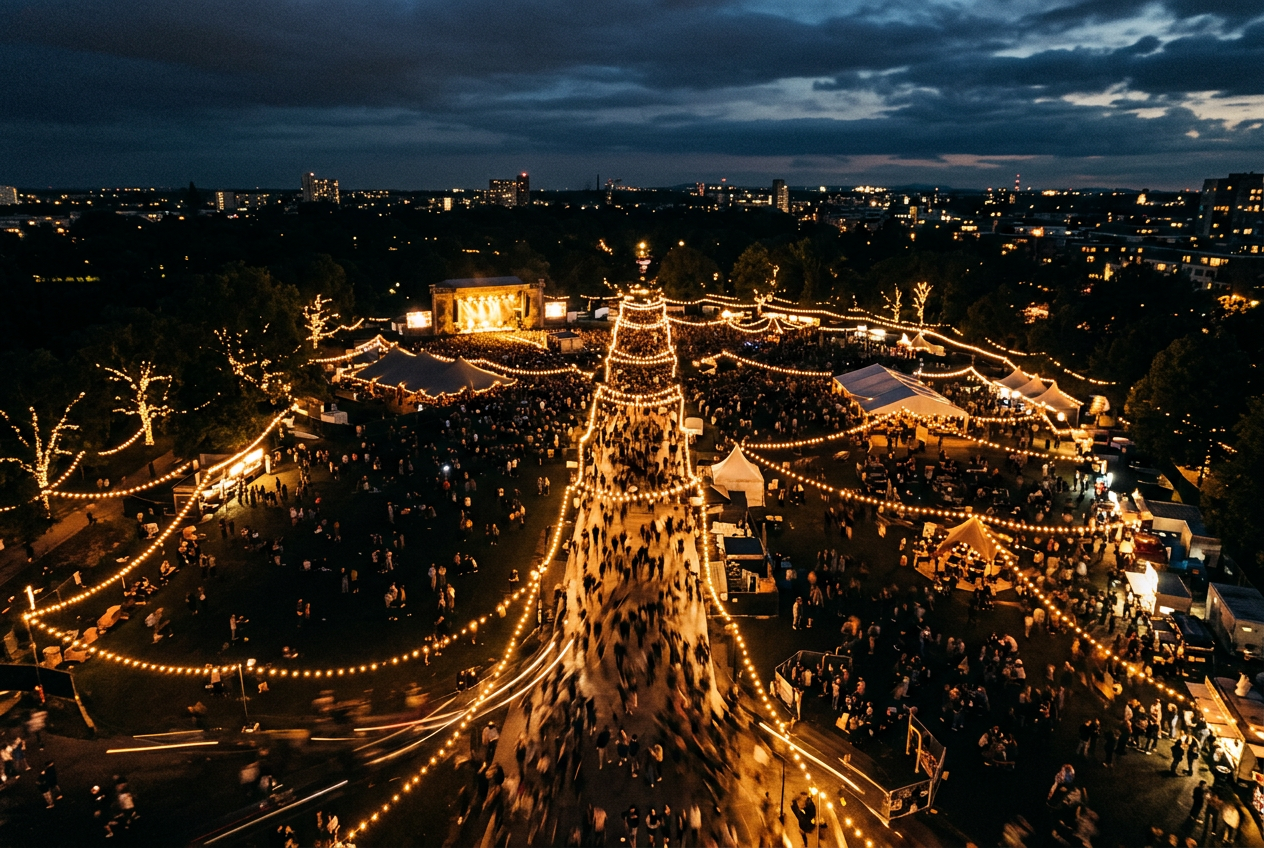
The Minnesota State Fair draws 2 million visitors over 12 days. The Texas State Fair runs 24 days and pulls 2.5 million. These numbers look irresistible on a brand plan slide, but anyone who’s actually executed a wine fair activation knows the reality: extreme heat, drunk crowds, logistical nightmares, and the constant threat of running out of product at 2pm on the busiest Saturday of the year. The brands that win at state fairs aren’t the ones with the biggest budgets—they’re the ones who’ve learned, often painfully, what actually works in these chaotic, high-volume environments.
Start With Honest Math, Not Aspiration
Before committing to a state fair, run the numbers without optimism bias. A 12-day activation requiring 6am load-in and 11pm teardown means you’re staffing roughly 200 labor hours per day. At a modest $25/hour fully loaded, that’s $60,000 in labor alone—before you’ve rented a tent, printed a banner, or shipped a single case. Add booth fees (which can run $15,000-$50,000 depending on location and fair), product cost, insurance, permits, and the inevitable emergency runs to Home Depot, and you’re looking at a minimum $100,000 investment for a mid-tier presence.
The question isn’t whether you can afford it. The question is whether those 50,000 sample pours translate to measurable velocity lift at the Total Wine 20 miles away, or whether you’re just generating nice photos for your next sales meeting. The brands that get ROI from fair activations have already secured incremental placements, floor stacks, or feature pricing at nearby retail before they sign the booth contract. The activation drives traffic to a destination that’s ready to convert.
Design for Punishment, Not Instagram
Your beautiful trade show booth—the one with the reclaimed wood bar top and the delicate acrylic signage—will not survive day three of the Iowa State Fair. Design every element assuming it will be subjected to 95-degree heat, sudden thunderstorms, sticky hands, and the guy who leans his full body weight on whatever surface is nearest.
The materials that actually hold up: powder-coated steel frames, vinyl graphics that can be hosed down, commercial rubber mats that hide stains, and serving surfaces that don’t show water rings. Skip anything that requires careful handling or precise assembly. Your morning setup crew will be different from your afternoon crew, and neither group will have read the assembly instructions you laminated so carefully.
Smart brands also design for speed of service. When a wave of 400 people exits the grandstand after the Tim McGraw concert, you need to pour samples at a rate that prevents dangerous crowding. That means multiple pour stations, pre-poured samples when regulations allow, and a layout that creates natural flow rather than a mob scene. The fair doesn’t care about your brand story if your booth is creating a safety hazard.
Staff for Endurance, Not Expertise
The instinct is to staff fair activations with your most knowledgeable brand ambassadors—the ones who can speak eloquently about terroir and winemaking philosophy. Those people will be destroyed by day four. State fairs require a different profile: physical stamina, heat tolerance, comfort with repetitive interactions, and the ability to stay cheerful while explaining the same three talking points 600 times per day.
The most successful fair teams blend one or two senior brand representatives who handle trade conversations and VIP moments with a larger crew of experienced promotional staff who can handle the volume work. Look for staff with restaurant or catering backgrounds—they understand the physical demands and can execute when things get chaotic. And build in rotation: nobody should work more than six hours on the floor, and nobody should work more than four consecutive days without a break.
Capture Value Beyond the Pour
The sample itself is the least valuable part of a fair activation. What matters is what happens next: the email capture for your DTC funnel, the QR code scan that delivers a rebate for retail purchase, the social share that extends your reach, the conversation with the distributor rep who happens to walk by.
Build capture mechanics into the experience flow, not as an afterthought. The moment someone tastes and likes your wine, they’re maximally receptive—that’s when you ask for the follow-up action, not after they’ve wandered off toward the corn dog stand.
State fair activations can absolutely drive brand growth, but only when the planning matches the intensity of the environment. The brands that treat fairs as “big samplings” get eaten alive. The brands that treat them as complex operations—with the logistics, staffing, and retail coordination to match—come out with real wins.