In-Store vs. Event Activation: When to Use Each
Smart wine and spirits activation strategy means matching the right format to your specific goals, timing, and market conditions.
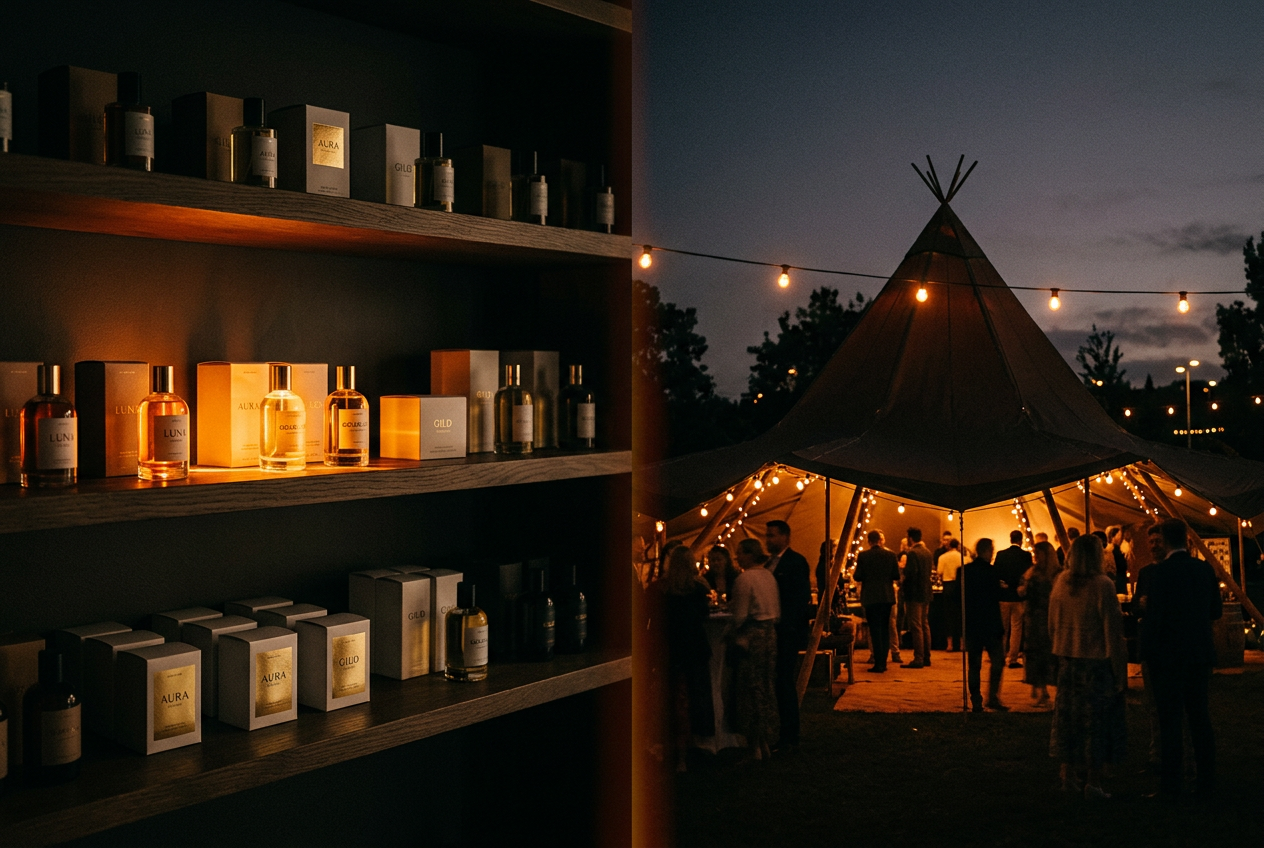
A national wine brand recently asked us to help them “do more activations” in a key market where depletions had plateaued. When we dug into their previous year’s activity, we found they’d executed forty-two in-store demos across Total Wine and BevMo locations: solid work, decent conversion rates. But their brand awareness scores hadn’t moved. They were optimizing for trial in a market where trial wasn’t the problem. They needed consideration and emotional connection. They needed events, not more sample pours behind a folding table.
Choosing between in-store and event activation isn’t about budget or bandwidth. It’s about diagnosing what’s actually blocking growth and deploying the format that addresses it. Get this wrong, and you’re spending money to move metrics that don’t matter.
The Case for In-Store: Conversion at the Point of Decision
In-store activations work when you have a product that can win on first sip but isn’t getting picked up off the shelf. This is classic trial-to-purchase work. The consumer is already in buying mode, already in the category aisle, already planning to leave with a bottle. Your job is to intercept that decision and redirect it toward your brand.
The economics here are straightforward and measurable. A well-executed demo at a Costco or Total Wine location should convert somewhere between fifteen and thirty percent of engaged shoppers to purchase, depending on price point and category. For a $15 to $20 bottle, you’re looking at a cost-per-acquisition that’s hard to beat with any other tactic. And because you’re inside the retailer’s environment, you’re building the relationship with that account simultaneously. Store managers notice when a brand invests in moving product off their floor.
In-store works best for new SKUs that need velocity to earn shelf space, for brands re-entering a market after distribution gaps, and for driving seasonal programming around holidays or occasions. It’s surgical and transactional by design.
But in-store has real limitations. The environment is inherently low-attention. You have maybe ninety seconds to make an impression before someone’s spouse is texting them to hurry up. There’s no room for storytelling, no space to build emotional resonance. You’re competing with fluorescent lighting and a dozen other brands doing the exact same thing three aisles over. If your challenge is that consumers don’t understand why your mezcal costs twice as much as the one next to it, a plastic sample cup isn’t going to close that gap.
The Case for Events: Building the Brand Beyond the Bottle
Event activations operate in a completely different psychological space. When someone attends a tasting dinner, a distillery pop-up, or a branded experience at a food and wine festival, they’ve already opted in. They’re giving you their time, their attention, and often their social currency. They’re posting about being there. This is where you build the story that justifies premium pricing, creates emotional loyalty, and generates the kind of word-of-mouth that no amount of shelf talkers can replicate.
For luxury and super-premium brands especially, events are often the only format that makes sense. You cannot communicate the heritage of a fourth-generation family estate or the craft behind a small-batch bourbon through a two-ounce pour in a parking lot. You need controlled environments where the sensory experience, the narrative, and the social context all reinforce the brand’s positioning.
Events also reach consumers that in-store simply can’t touch. The sommelier who influences a hundred restaurant lists. The private client advisor at a wealth management firm who hosts client dinners. The lifestyle media contact who’s never setting foot in a grocery store but will write about an interesting experience. These audiences require a different kind of access.
The tradeoff is efficiency. Events are expensive to produce, logistically complex, and notoriously difficult to measure in terms of direct sales attribution. A $30,000 dinner series might generate fifty deeply converted brand advocates: worth it if those advocates are the right people, disastrous if they’re just the same industry friends who show up to everything.
Sequencing and Integration: The Strategic Layer
The real sophistication comes in understanding how these formats work together across a market-building timeline. A new market entry might start with event activations targeting trade accounts and media, building credibility and pull before the product even hits retail shelves. Once distribution is established, in-store activations drive trial velocity and help secure reorders. Later, as the brand matures in that market, you might shift back toward events, but now focused on consumer loyalty rather than trade introduction.
We’ve seen brands waste significant budget by running these tactics in the wrong sequence. Pouring samples at fifty retail locations means nothing if the distributor sales team hasn’t been trained, if there’s no shelf placement to support it, or if the product is sitting at a price point that requires more explanation than a demo can provide.
The question isn’t which format is better. It’s which format solves the specific problem you’re facing in a specific market at a specific moment. That requires honest diagnosis before tactical planning, something that’s harder than it sounds when everyone’s under pressure to “just do something.”
When the activation strategy matches the actual challenge, every dollar works harder. When it doesn’t, you’re just busy.