Tasting Room Merchandising: Best Practices for Wine Brands
Strategic tasting room merchandising drives wine DTC revenue beyond the bottle. Here's how leading brands maximize every visitor interaction.
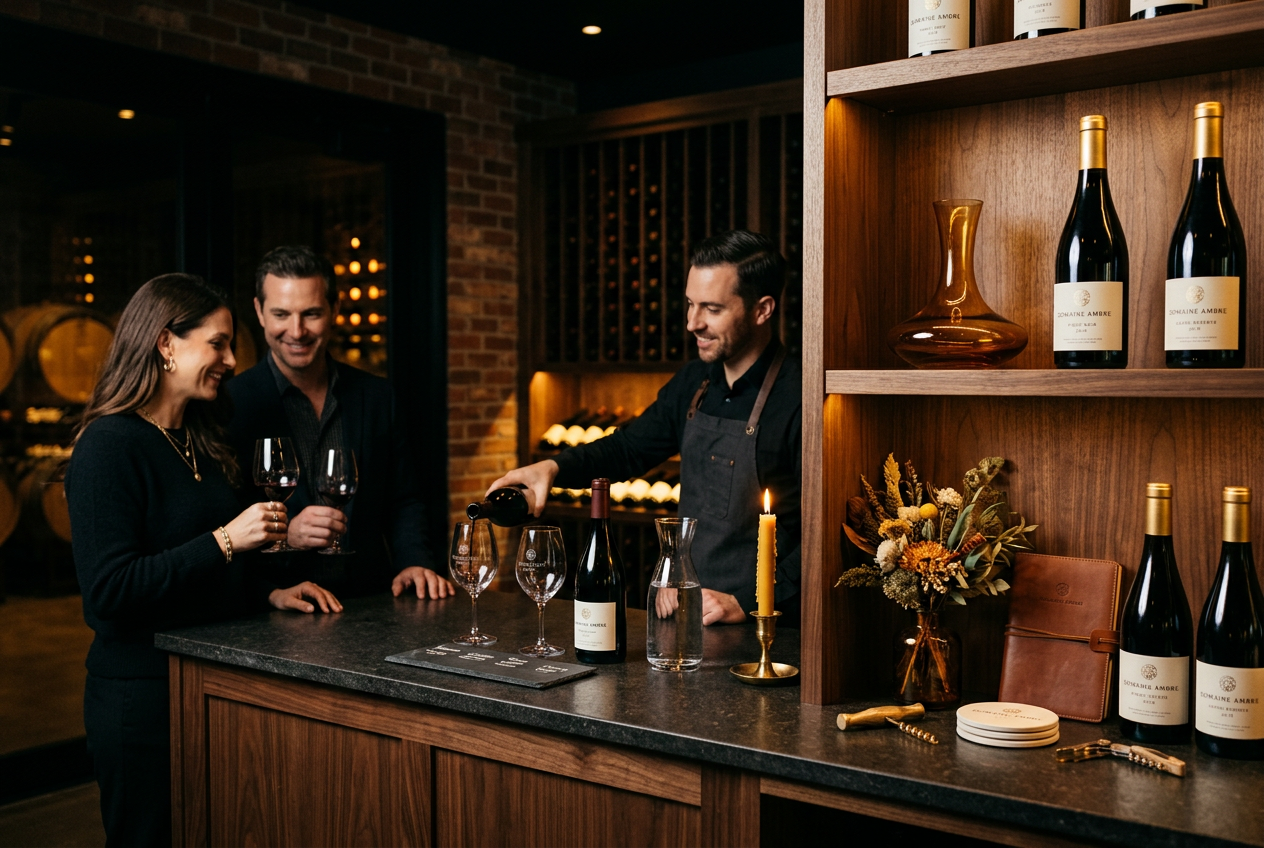
A visitor walks into your tasting room, spends 45 minutes falling in love with your estate Cabernet, buys two bottles, and leaves. You’ve captured maybe $120 in revenue from someone who drove an hour to see you, who’s emotionally primed to become a brand evangelist, and who won’t visit again for another 18 months. This is the merchandising gap that separates wine brands treating their tasting rooms as retail afterthoughts from those building genuine DTC profit centers.
The Economics of Tasting Room Merchandise
The math on tasting room merchandising is more compelling than most wine brands realize. A well-curated merchandise program typically adds 15-25% to average transaction value without cannibalizing wine sales. More importantly, merchandise creates touchpoints that extend brand presence into customers’ daily lives—a branded corkscrew used at home, a logo cap worn to a farmers market, a branded tote carried into Whole Foods. These aren’t just revenue opportunities; they’re walking billboards in exactly the demographic you’re trying to reach.
Consider the lifetime value calculation. A visitor who buys a $45 pullover alongside their wine purchase isn’t just generating incremental margin today. They’re wearing your brand to dinner parties, to other wineries, to grocery runs where they’ll inevitably stand in front of the wine wall. The brand impression value of quality merchandise often exceeds the direct revenue, yet most tasting room merchandise programs are managed as an afterthought—leftover logo gear selected from a promotional products catalog, displayed on a dusty rack near the restroom.
Curating a Collection That Actually Sells
The most common merchandising mistake is treating the program as a logo placement exercise rather than a retail operation. Your merchandise assortment should function as a thoughtfully edited collection, not a dumping ground for every item that can be screen-printed.
Start with three categories that work in virtually every tasting room context. First, functional wine accessories that visitors will actually use: quality corkscrews, wine keys for the trade-savvy customer, stemless glasses that work for everyday drinking, and wine totes that solve the immediate problem of transporting their purchase. These items sell because they’re useful in the moment and create ongoing brand contact.
Second, wearables that people genuinely want to wear. This means investing in blanks that fit well and feel good—a $32 retail hoodie on a $8 blank reads as cheap, while the same price point on quality fabric reads as value. Regional aesthetic matters here. Napa visitors respond differently than Willamette Valley visitors. Your merchandise should reflect not just your brand but your region’s lifestyle positioning.
Third, curated local partnerships that extend your brand story. A collaboration with a local ceramicist for a custom wine dish, a partnership with a regional olive oil producer for a food-and-wine gift set, or a co-branded item with a neighboring winery for a shared trail program. These partnerships create differentiation that generic promotional products never can.
Display and Staff Integration
Merchandising strategy fails at execution when display and staff training are neglected. Your merchandise should be positioned within the natural flow of the tasting experience, not relegated to a corner that requires a deliberate detour. The most effective tasting rooms integrate merchandise touchpoints throughout the space—a branded candle burning at the tasting bar, staff wearing the current season’s apparel, featured items positioned near where visitors naturally pause.
Staff integration matters more than display fixtures. Your tasting room team should be able to speak authentically about merchandise the same way they discuss vineyard blocks. When a guest compliments a staff member’s jacket, “Thanks, it’s our fall release—the weight is perfect for foggy mornings here” converts more effectively than a rack with a price tag. Train staff to identify merchandise cues the same way they read wine preferences: the visitor photographing your view probably wants the print, the one asking about food pairings likely responds to culinary accessories.
Seasonal Programming and Inventory Discipline
Tasting room merchandising requires the same seasonal discipline as fashion retail, just with fewer SKUs. A spring refresh, summer core assortment, fall harvest collection, and holiday gift edit gives repeat visitors reasons to browse again while keeping inventory lean. This doesn’t mean reinventing the program quarterly—it means thoughtful additions and retirements that signal intentionality.
Inventory discipline is where many programs leak margin. Ordering minimums from promotional suppliers often force brands into quantities that take years to sell through, tying up cash and creating stale displays. The alternative is working with partners who understand beverage industry scale and can deliver appropriate quantities with reorder flexibility.
The brands that excel at tasting room merchandising treat it as a strategic channel, not a sideline. They invest in quality, curate intentionally, and integrate merchandise into the full visitor experience. The visitor who leaves with a pullover and a logo tote alongside their wine shipment isn’t just a higher-value transaction today—they’re a brand ambassador walking out your door.